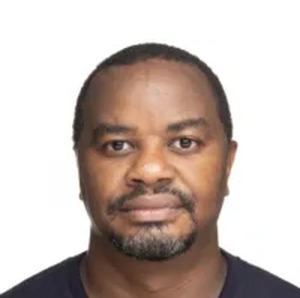
Muchai Gateru
Director, Navari Limited · Company Story · August 18, 2025
About 280 kilometres from Nairobi, on the northeast slopes of Mount Kenya, sits a small town called Meru: farms, forest and a community full of local businesses quietly getting on with things. It is where Muchai Gateru grew up, and where the story behind Navari really begins.
Muchai's parents shaped him early. His mother, a farmer and trader, showed him what steady hard work looks like. His father, a mechanic, planted the idea that he could be an engineer. Growing up around traders taught him something else too: that doing a modest amount of work well beats taking on more than you can handle.
"I grew up in a place where everyone was doing something of their own. It became a goal for me early on to build something that uplifted a community."
He didn't arrive at Navari with a plan already in hand. Muchai moved to Nairobi to study, eventually earning a BSc in Information Technology, and it was there that enterprise software first caught his interest. In 2008 he joined Netcom as a PL/SQL developer, then moved into consulting on Microsoft Dynamics, building a custom payroll system on Dynamics NAV in 2010 that gave him real confidence in his own skills.
Navari was founded in November 2015, originally around Microsoft Dynamics implementation. It did not take off immediately. For nearly two years Muchai worked freelance while the company found its footing, and it was during this stretch that he first came across ERPNext and the Frappe Framework, out of curiosity more than strategy.
The turning point came in 2018, on a Dynamics NAV project for a Nairobi hospital. Coordinating separate vendors for every module, in an industry where nothing can afford to fall through the cracks, made the limitations obvious. What the project actually needed was a single, end to end platform. That realization sent Muchai back to ERPNext, and this time he committed to it fully.
"It felt like somewhat of a risk to change our strategy and system. But I also wanted to do what made sense to me at that time. It was where the market was going."
The switch was right, but it was not easy. Projects were scarce, the company ran paycheck to paycheck, and it was the support of his family that kept him going through it. The first project of real size did not land until later that year, for a water and sanitation company.
Navari's quality first approach eventually started to pay off. Former Microsoft Dynamics clients came looking for something more affordable and complete, and the team grew alongside them. Today Navari is a team of 15, mostly hired well after the company's founding and mostly in their 20s, put through a deliberately rigorous hiring and training process so they can own their work without needing constant oversight.
"I am a nurturer by nature, a result of the community I grew up in. I want everyone who joins the team to succeed, whether they end up staying with us or not."
That sense of ownership runs through how Navari works with clients too: knowing their own limits well enough to say no to projects that are bigger than the team can do justice to, even when it means passing on the opportunity. Being a remote team, they make a point of meeting in person several times a year to stay connected.
Muchai and the wider Navari team have also put real effort into the regional Frappe community, helping run events like Frappe Local Nairobi and Frappeverse Africa, and contributing back products such as a tax compliance app and a two way M-Pesa payment integration. It is part of how Navari has grown into one of the most established ERPNext and Frappe partners across East and Southern Africa.
"If we're building, why not build for the community. We want to be profitable, but we're not strict on revenue. We want to do good work and rise with the ecosystem. The money will follow."
Almost a decade on from Navari's founding, the through line back to Meru is easy to see: build something well, take on only what you can do justice to, and let the community you serve grow with you.